
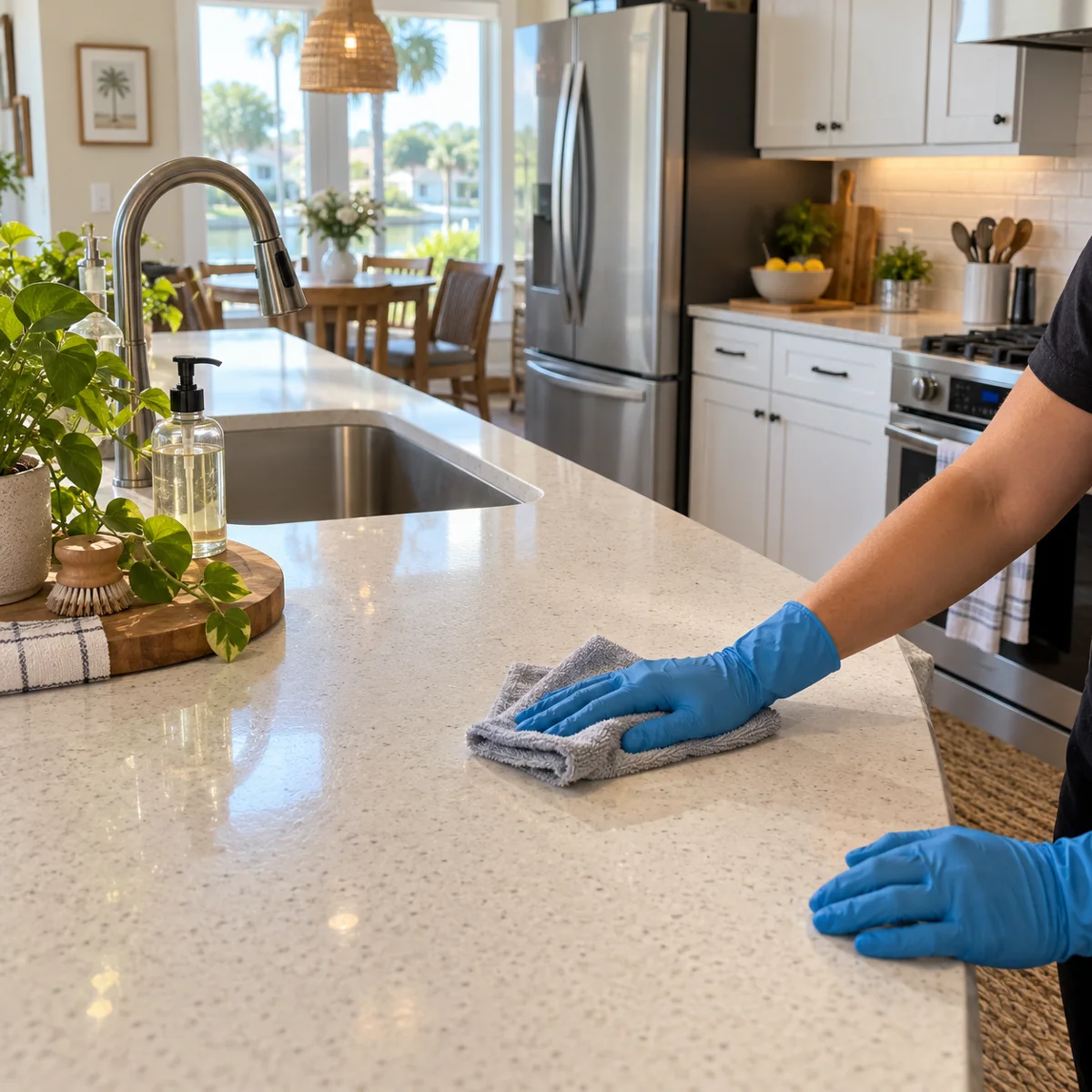
A smooth counter may be natural stone, engineered material, laminate or something else entirely. Its appearance alone is not enough to choose a cleaner. Ask for the material name and the maker’s care guide. Marble and other acid-sensitive stone deserve particular caution with products often promoted as everyday household remedies.
A gentle starting point
The Natural Stone Institute recommends neutral cleaner, stone soap or mild detergent for suitable stone care. Use the surface maker’s directions to decide which is appropriate. Remove loose debris, use controlled moisture and avoid leaving a heavy film. Do not treat an intact-looking sealer as permission to use any chemical.
Keep acids away from sensitive stone
Vinegar, lemon and some mineral-removal formulas can dull or etch certain stones. Abrasive pads can change the finish as well. A kitchen product should be checked for both the stone and any nearby metal or wood. Test discreetly only when appropriate, and stop if the finish changes.
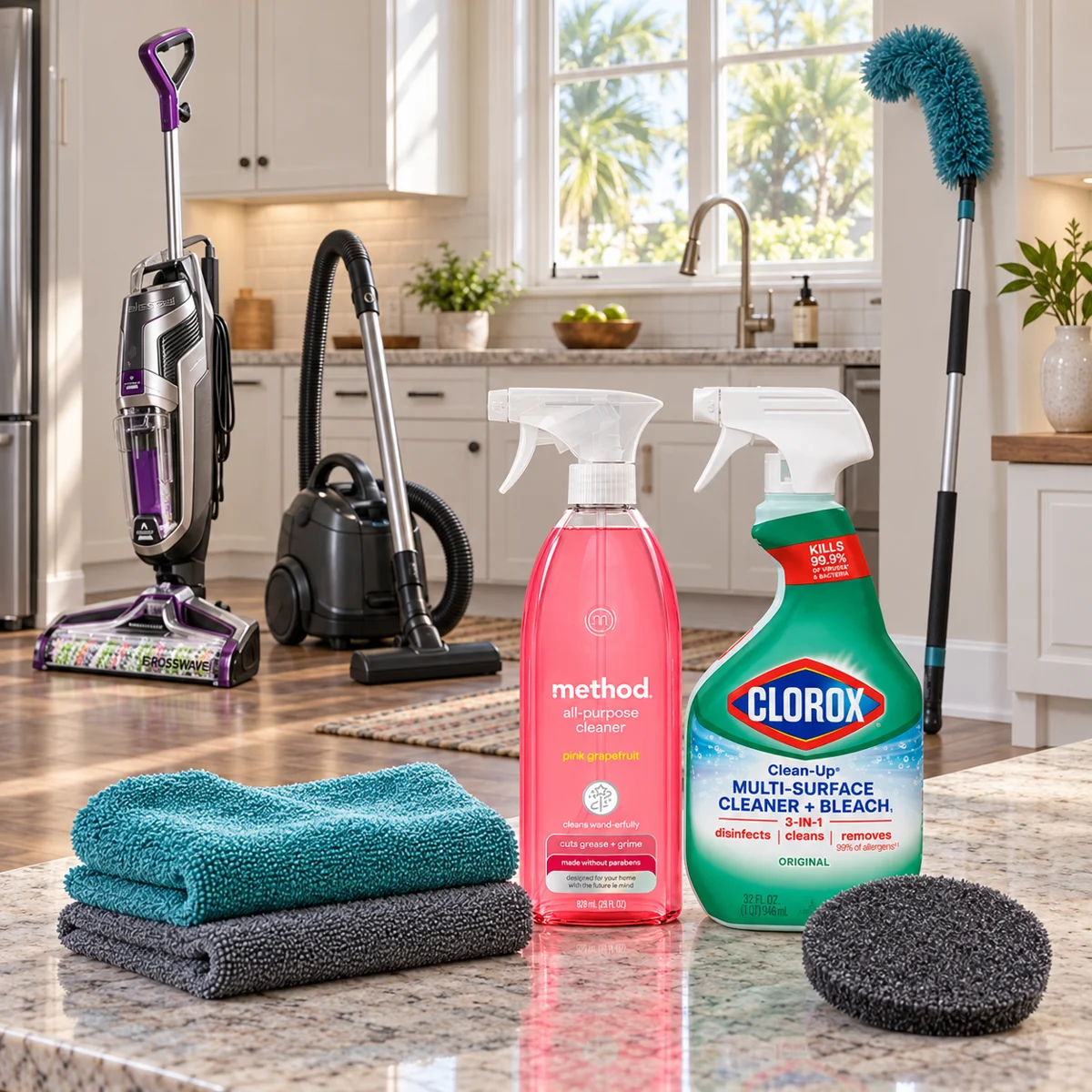
Countertop-care checklist
- Confirm the material and any coating or sealer.
- Lift agreed movable items without dragging them.
- Collect crumbs and wipe ordinary residue gently.
- Remove cleaner as the directions require.
- Dry the suitable surface and replace items carefully.
A dull patch is not always dirt
Etching changes the surface rather than leaving removable soil on top. A worn finish or deeply absorbed stain may need a stone-care specialist. Repeated scrubbing will not reverse that damage. Document marks before the service so existing conditions are understood by everyone.
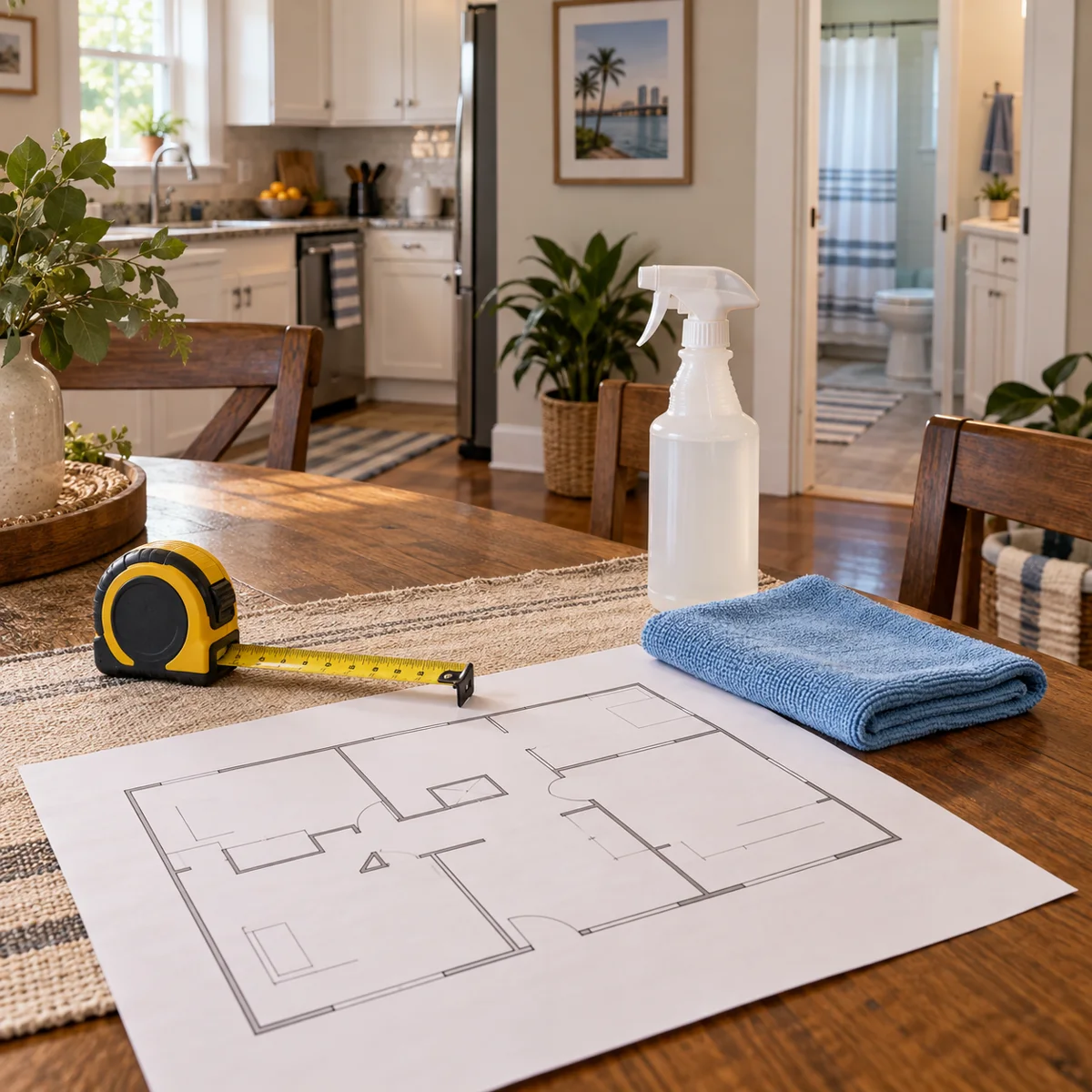
Give the crew useful information
Tell us which counters are stone and whether there are any care restrictions. Clear accessible work areas where possible and identify fragile items. The cleaning quote covers agreed surface care; polishing, sealing, repairs and heavy-item moving should be scoped separately rather than assumed part of a home-cleaning package.
Manufacturer and care references
Use the instructions for your exact model and product. These references support the material-specific points in this guide.