

Wood-look flooring is not all the same. Solid wood, engineered wood, laminate and vinyl have different moisture limits and care instructions. Before mopping, confirm the material and its condition. A method that leaves a tile floor fine may create a problem at a damaged seam or an unsealed wood edge.
Collect grit first
Use a suitable dry vacuum head or dust tool to remove loose particles. Check the pad and wheels for trapped debris. Reachable edges and doorways often collect grit, so give them a separate pass. Avoid dragging heavy furniture just to reach an area that has not been included in the service scope.
Control the amount of liquid
Follow the flooring maker’s guidance for cleaner and moisture. A damp compatible pad is different from a soaking wet mop. Do not leave puddles at seams or a wet pad sitting on the floor. Steam should not be treated as universally safe; heat and moisture restrictions depend on the flooring and finish.
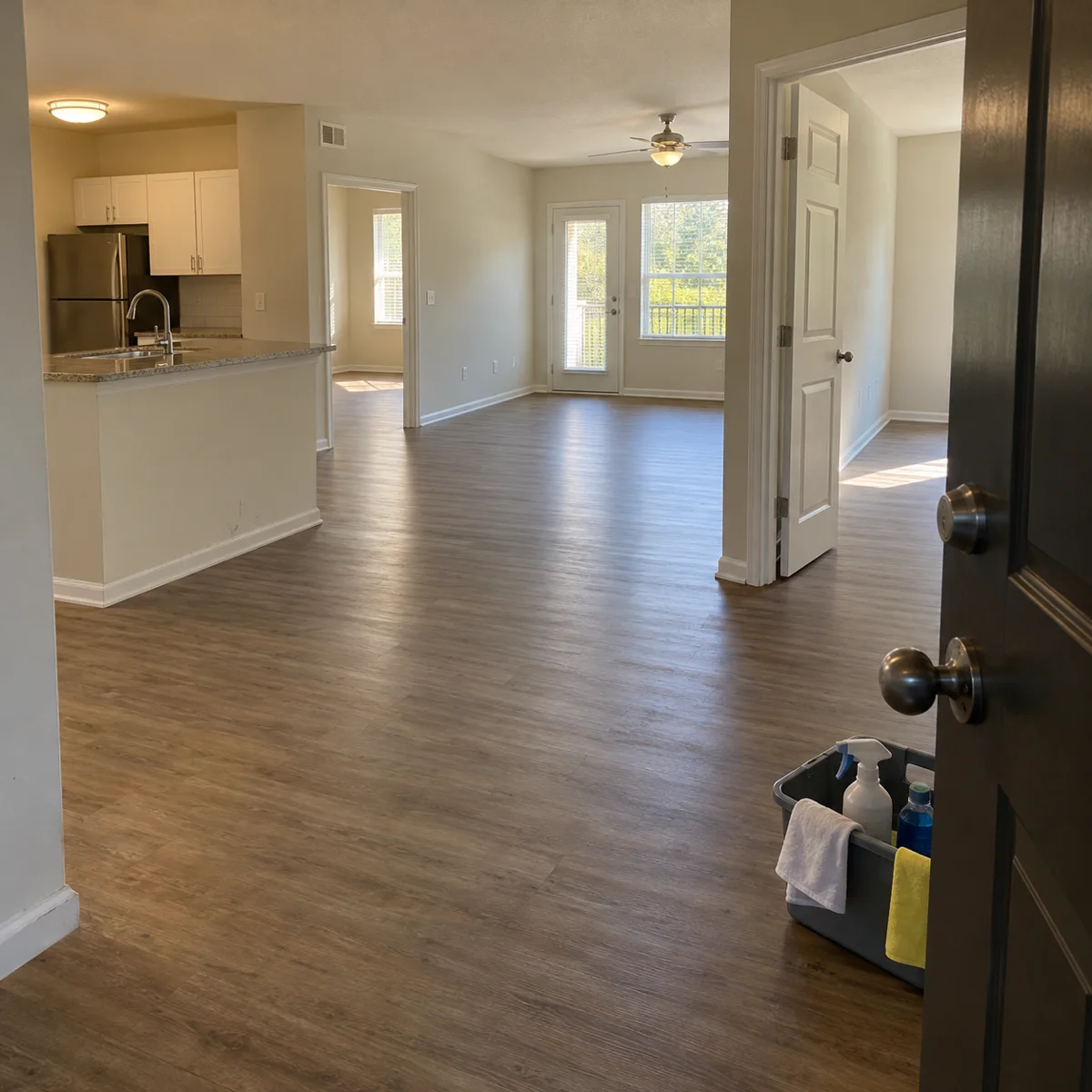
Plan the route
- Identify the material and note lifted or damaged areas.
- Remove dry dust and debris.
- Use a clean compatible pad and approved product.
- Work toward the exit without repeatedly soaking a spot.
- Allow drying before traffic, rugs or furniture return.
Stop when condition changes the task
Loose boards, peeling coatings and swollen edges need review before wet work. A dull traffic path may be wear rather than residue. Cleaning cannot replace a damaged finish. Report these conditions instead of trying stronger chemicals or more water to make the area look new.
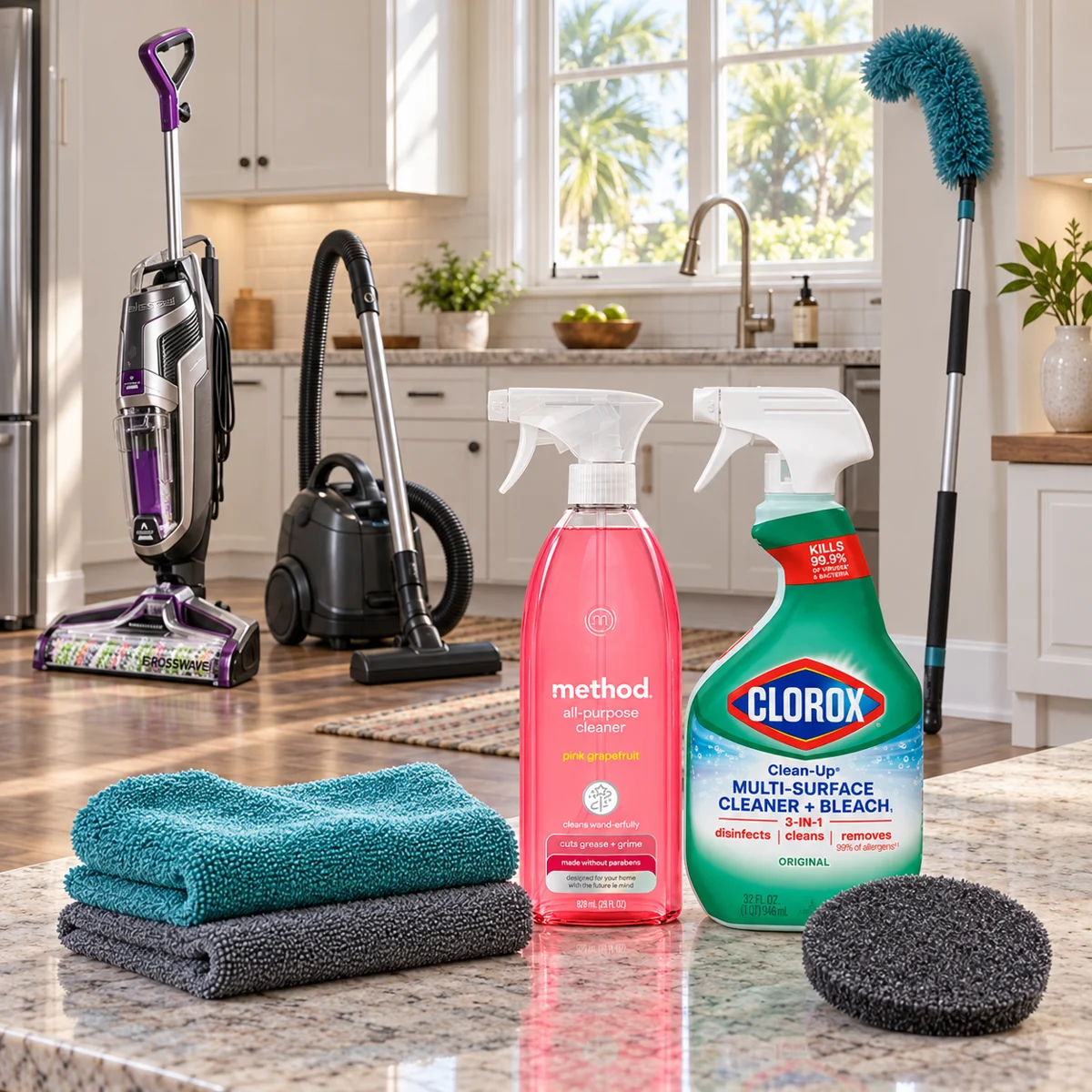
How to request floor care
Tell the team the flooring type, approximate area and any damaged spots. Photos help when the material is uncertain. Routine floor cleaning is separate from refinishing, carpet extraction or restoration. The agreed visit should match the material and reachable space, with realistic expectations about existing wear.
Manufacturer and care references
Use the instructions for your exact model and product. These references support the material-specific points in this guide.