

Wet cleaning is easier when the loose material is already gone. Crumbs, hair and grit can turn a damp cloth or mop into a tool that spreads soil. A separate dry vacuum is useful for preparation, carpets and areas where water should not be used. The right sequence depends on the floor and the equipment, not on speed alone.
Pick the right head
Check whether the floor is hard material, carpet or a rug. Use a head and brush setting approved for that surface. Look for trapped grit or a damaged wheel before starting. A rotating brush that works on carpet may not be the right setting for a delicate hard finish. Stay with the vacuum manufacturer’s care guidance.
Edges deserve their own pass
Work around the room before covering the open floor. Use a suitable attachment along accessible baseboards, under reachable furniture and near door tracks. Do not force a hose behind fragile items or pull furniture that has not been agreed for moving. Pick up large objects by hand instead of hoping the vacuum can handle them.
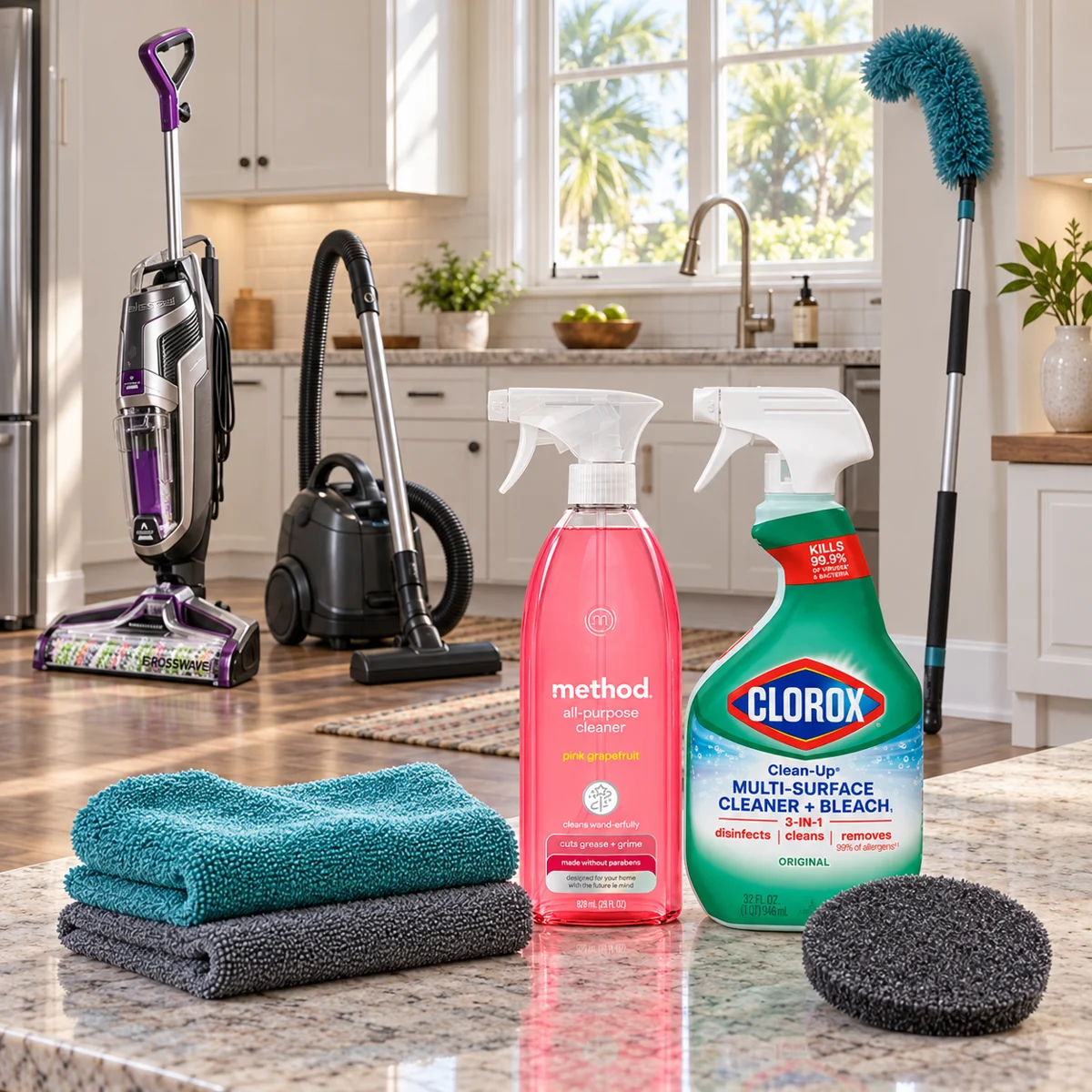
A practical order
- Clear the accessible floor and secure cords.
- Dust reachable higher surfaces first.
- Vacuum edges and then the open floor in overlapping passes.
- Check the container or bag and filter according to the manual.
- Damp-clean only the flooring that permits it.
Keep dry equipment dry
A conventional dry vacuum should not collect spilled water. Some wet/dry machines can do that, but their setup and filters vary. Check the exact model rather than assuming all vacuums are interchangeable. Fine renovation dust and hazardous material also require specialist assessment and appropriate equipment.

What to expect from a visit
Routine vacuuming covers reachable, agreed areas. It is different from moving heavy furniture, extracting carpets or restoring worn flooring. Tell the service team about loose rugs, damaged boards and fragile items. A clear floor gives the crew more time for the cleaning itself and helps keep the agreed scope predictable.
Manufacturer and care references
Use the instructions for your exact model and product. These references support the material-specific points in this guide.