
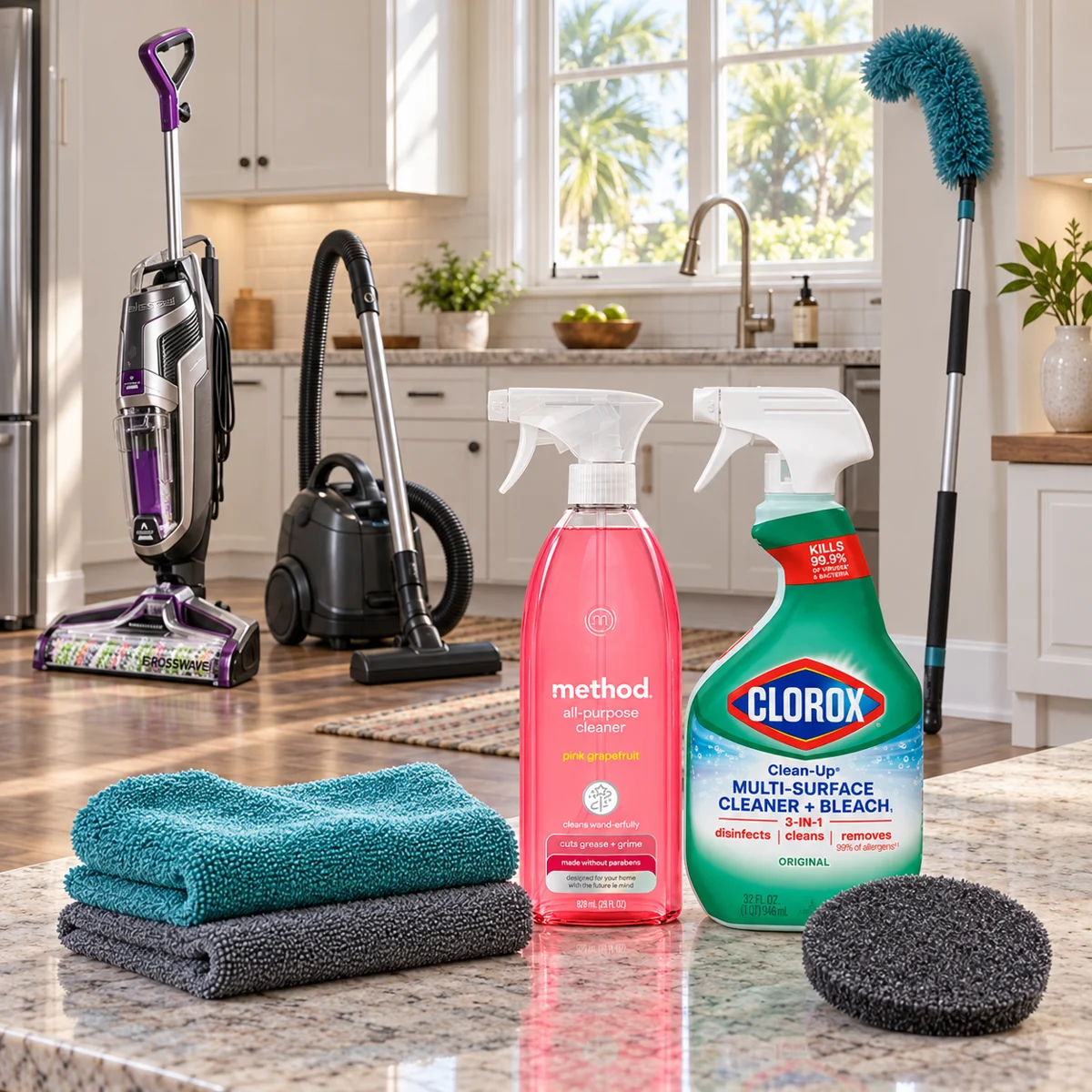
An impressive bottle is not a substitute for the right product. A kitchen counter, a glass panel and a wood floor can each react differently to the same formula. Start with the material, the type of residue and the manufacturer’s care instructions. That is a more useful decision than choosing the strongest scent or the word “professional” on a label.
Read the job before the label
Separate loose dust from greasy film, dried food and mineral deposits. Dust often needs collection rather than a chemical treatment. Grease needs an appropriate cleaner and wiping. A chalky mark may be residue, but it can also be a damaged finish. Do not keep increasing strength when a surface is already changing color or losing its sheen.
Give every product a defined role
A general-purpose spray can be useful on the nonporous materials listed on its label. Glass cleaner has a different purpose. A disinfectant has separate directions, and a floor-machine formula must be approved for the machine. Keep products in their labeled containers and use them separately. Familiar brands such as Method and Clorox still require surface checks; a brand name does not mean every product in the range is suitable everywhere.
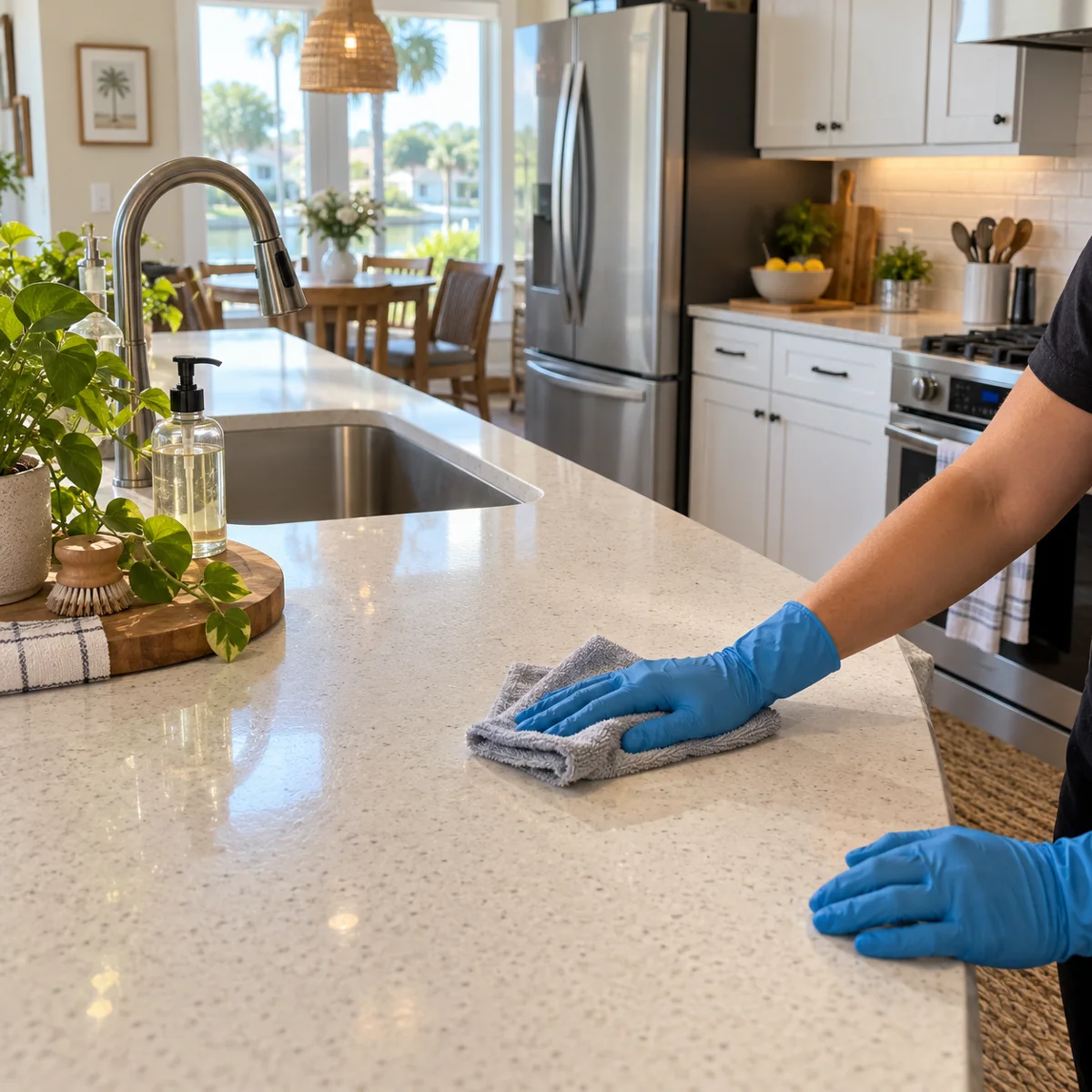
A simple selection checklist
- Identify the material and any protective coating.
- Check the appliance or surface care guide.
- Read the product’s permitted uses, dilution and rinsing directions.
- Test a discreet area when the care guide allows it.
- Use the gentlest method that removes the ordinary residue.
Mistakes that make cleaning harder
More liquid can leave more residue. Rough pads can change a finish. Mixing formulas can create an unsafe reaction rather than extra cleaning power. Keep bleach separate from other cleaners, ventilate as the label directs and store the kit away from children and pets.

When to ask for help
If you cannot identify a stone, coating or appliance finish, pause and ask the owner or manufacturer. For a service visit, mention delicate materials and existing damage when building your cleaning plan. The chosen checklist should explain the task; it should not promise that wear can be cleaned away.
Manufacturer and care references
Use the instructions for your exact model and product. These references support the material-specific points in this guide.