
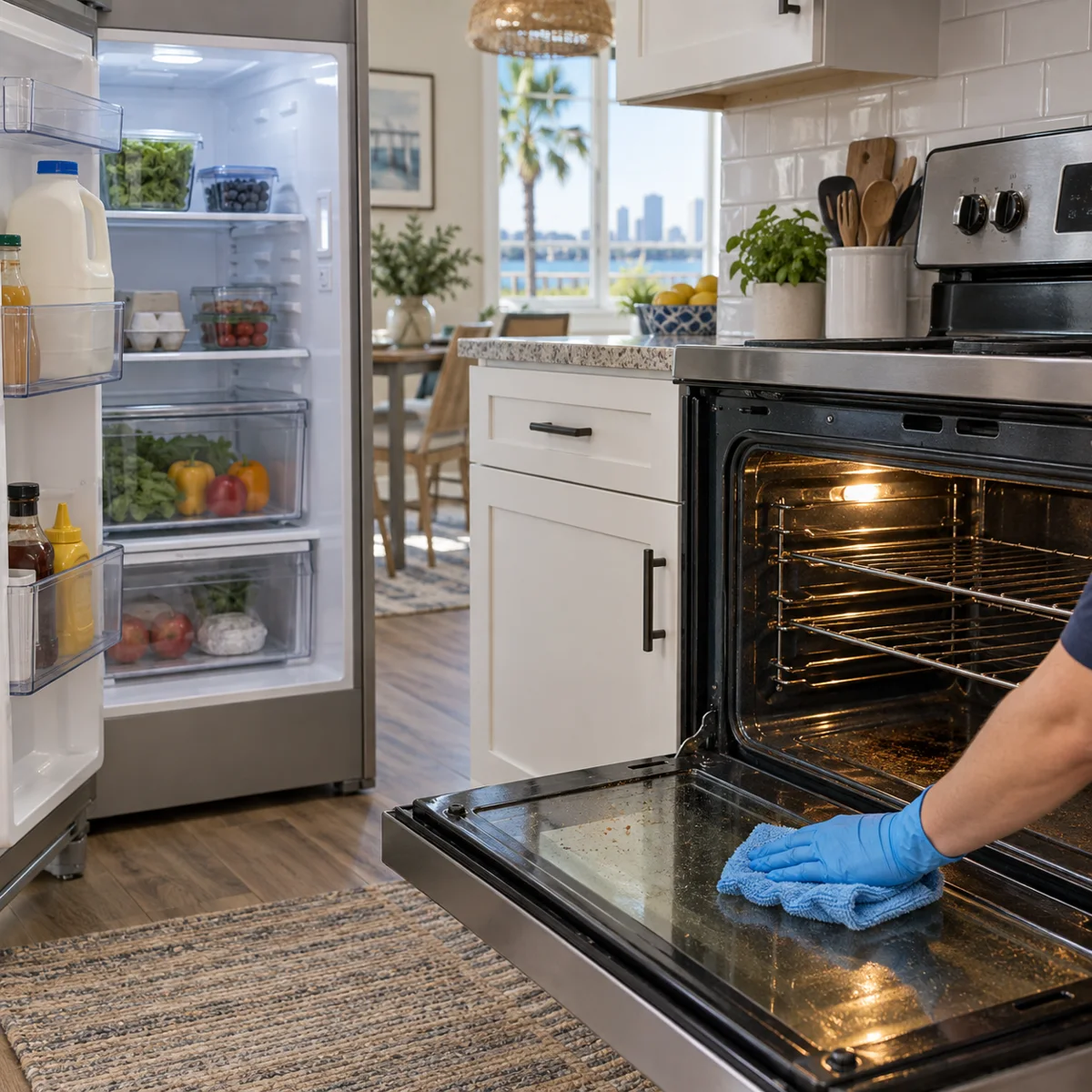
A refrigerator clean should be planned so food stays appropriately stored and the inside can be reached. Everyday drips and crumbs are usually a manageable task. Persistent leaks, damaged seals or unexplained contamination need a different assessment. Identify the model and check which shelves and drawers can be removed.
Arrange food before cleaning
Work in a way that keeps perishable food under suitable temperature control. Decide what the owner will move, discard or keep before the service begins. A cleaner should not make food-disposal decisions without permission. Avoid leaving everything on a warm counter while working slowly through the appliance.
Let glass adjust gradually
Do not expose a cold glass shelf to hot water. A sudden temperature change can cause breakage. GE’s care guidance specifically flags this issue. Remove only the parts designed to come out, let them reach a suitable temperature and use the model-approved wash method. Do not force trim or drawer slides.
A shelf-by-shelf sequence
- Prepare food storage and clear one agreed section.
- Collect crumbs and wipe small spills.
- Clean permitted removable parts gently.
- Wipe reachable door-seal folds without tearing them.
- Dry and replace parts before returning the contents.
Avoid fragrance and hidden puddles
Use a formula suitable for the interior and follow any rinsing directions. Strong fragrance is not evidence that a refrigerator is clean. Remove moisture rather than leaving liquid in channels or beneath drawers. Electrical parts and vents should not be saturated. A damaged gasket is not repaired by vigorous wiping.
Make the scope clear
Fridge interiors are optional extras in our home plans. State the number of refrigerators, whether they will be emptied and the current condition. Send photos of unusual spills or an appliance that has been shut off for a long period. That lets the team review the work and agree on the final scope before arrival.
Manufacturer and care references
Use the instructions for your exact model and product. These references support the material-specific points in this guide.